
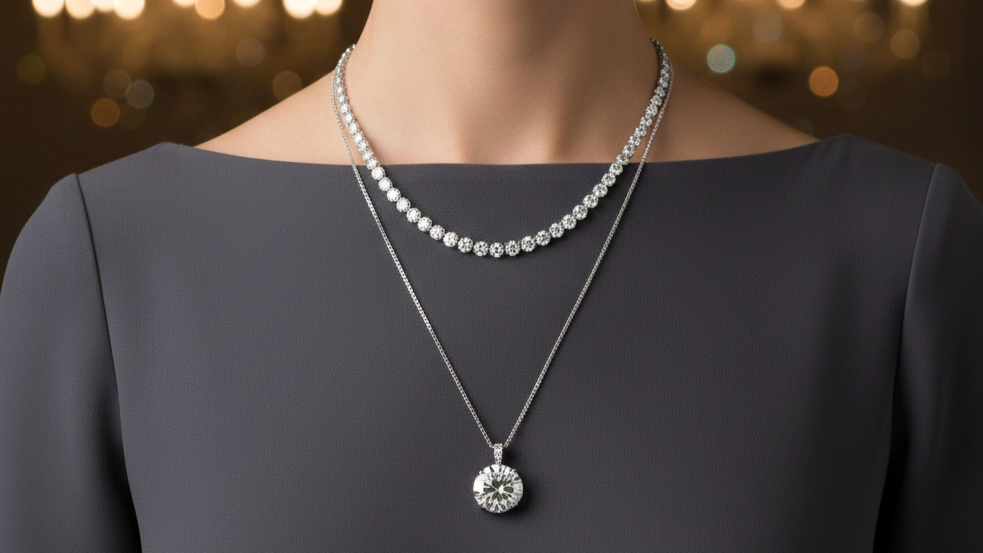
There are many types of pendants explained by their shape, gemstone, setting, and purpose. From a simple solitaire diamond pendant to a meaningful locket or colourful gemstone design, each style gives a necklace a different character.
Understanding the different types of pendants explained in this guide can help you choose a piece that suits your wardrobe, occasion, and personal style. Some designs are made for everyday use, while others are better suited to special occasions.
What Is a Pendant?
A pendant is a piece of jewellery that hangs from a chain, cord, or necklace. It can be made from precious metals and decorated with diamonds, coloured gemstones, engraving, or other details.

The pendant itself is different from the chain. A small component called a bail connects the pendant to the chain, allowing it to hang properly. The type of bail and chain can also affect how the finished necklace looks and moves when worn.
Pendants have been worn for centuries for decoration as well as personal and symbolic reasons. Today, they are available in many styles, making them suitable for both everyday jewellery and special occasions.
What Are the 7 Main Types of Pendants?
The main types of pendants explained in this guide are solitaire, halo, locket, gemstone, symbolic, cluster, and geometric pendants. Each style has its own visual character and works better for certain preferences.
1. Solitaire Pendants
A solitaire pendant features one main gemstone, most commonly a diamond. Instead of using several stones, the design keeps attention on one central stone.
Among the types of pendants explained here, solitaire designs are one of the easiest choices for someone who prefers a clean and classic appearance. They can work with everyday clothing as well as more formal outfits.
2. Halo Pendants
A halo pendant places smaller gemstones around a central stone. The surrounding stones add extra sparkle and give the pendant a fuller appearance.
This style suits someone who wants more detail than a solitaire pendant without moving into a very large statement piece. Halo designs can also make a smaller centre stone appear more prominent.
3. Locket Pendants
A locket is a pendant that opens to hold a small photograph, keepsake, or other personal item.
Among the different types of pendants explained here, lockets stand out because they combine jewellery with sentimental value. A locket may look simple from the outside, but what it holds can make it much more meaningful to the person wearing it.
They are often chosen as gifts for birthdays, anniversaries, or other personal milestones.
4. Gemstone Pendants
Gemstone pendants use coloured stones such as sapphire, ruby, or emerald. They are a good option for someone who wants more colour in their jewellery collection.
The gemstone can also influence the mood of the design. Sapphire tends to create a cooler appearance, while ruby offers a stronger and warmer contrast against precious metals.
5. Symbolic and Initial Pendants
Symbolic pendants use a particular shape, letter, or motif to represent something personal. Common examples include:
- Initials
- Hearts
- Stars
- Crosses
- Zodiac symbols
- Other meaningful motifs
These pendants are particularly suitable as personalised gifts. A simple initial, for example, can represent someone’s name without making the necklace look too decorative.
6. Cluster Pendants
Cluster pendants group several smaller diamonds or gemstones together. Rather than having one obvious centre stone, the stones contribute to the overall shape and sparkle of the piece.
This style is useful for someone who wants a more detailed appearance while still using smaller individual stones. Depending on the design, a cluster pendant can look classic, floral, or more contemporary.
7. Geometric Pendants
Geometric pendants use shapes such as circles, bars, squares, ovals, or abstract lines. Their clean structure gives them a modern appearance.
They are often easy to pair with contemporary clothing because they do not rely heavily on traditional decorative motifs. A simple geometric pendant can also work well when layered with another fine chain.
Which Pendant Style Should You Choose?
The right pendant depends on how you plan to wear it and what you want the jewellery to communicate. There is no single style that is automatically better than the others.
| Pendant Type | Main Feature | Best For | Style |
|---|---|---|---|
| Solitaire | One centre stone | Everyday wear | Classic |
| Halo | Surrounding gemstones | Extra sparkle | Elegant |
| Locket | Holds a keepsake | Meaningful gifts | Sentimental |
| Gemstone | Coloured stone | Adding colour | Distinctive |
| Symbolic | Letter or motif | Personal expression | Meaningful |
| Cluster | Multiple small stones | Detailed appearance | Decorative |
| Geometric | Clean shapes | Modern outfits | Contemporary |
If you want a necklace that can be worn regularly, simpler styles such as solitaire or geometric pendants are usually easier to combine with different outfits.
For those who prefer a subtle look, you can also explore minimalist pendants for daily wear. These designs focus on simplicity and versatility rather than heavy decoration.
How Do You Choose the Right Pendant?
Once you understand the different types of pendants explained above, choosing one becomes more practical. Instead of starting with a specific design, think about how the pendant will fit into your daily life.
- Decide when you will wear it.
An everyday necklace may benefit from a smaller and simpler design, while a special-occasion piece can have more detail.
- Choose your preferred gemstone.
Diamonds offer a classic look, while coloured gemstones can give the pendant a more distinctive appearance.
- Consider the size.
The pendant should be proportionate to the chain. A large pendant on a very delicate chain may look unbalanced.
- Look at the metal.
White gold, yellow gold, and rose gold each create a different overall appearance.
- Check the construction.
Look at the setting, bail, chain, and clasp, especially if you plan to wear the pendant frequently.
- Think about your existing jewellery.
Your pendant does not need to match every piece exactly, but similar metal colours or design elements can create a more coordinated appearance.
Why Are Pendants Still Popular?

Pendants remain popular because they are relatively easy to incorporate into an existing jewellery collection. They can be worn alone, layered with other necklaces, or combined with earrings and rings without necessarily becoming the main focus of an outfit.
A Grand View Research consumer survey involving more than 75,000 interviews across 20 countries found that 39% of consumers reported wearing jewellery daily, while 65% said they wore jewellery at least once a week. This shows why versatile jewellery continues to have a place in everyday wardrobes.
In our experience, clients often start with a simple question: Will I actually wear this often? That is a useful question because a beautiful pendant is more valuable to your collection when it fits naturally into your routine.
A Simple Example of Choosing a Pendant
Imagine someone looking for a necklace that works with office clothing during the week and a dinner outfit on the weekend. She likes diamonds but does not want something too formal.
A small solitaire pendant would be a sensible choice. It provides some sparkle but remains understated enough for everyday clothing.
Someone buying an anniversary gift might choose differently. A halo pendant could provide more visual impact, while a locket or symbolic pendant could have stronger sentimental meaning.
The best choice depends on why the pendant is being bought, not simply which design looks the most impressive in a jewellery display.
Which Types of Pendants Are Best for Everyday Wear?
Some types of pendants explained in this article are naturally easier to wear every day than others. Solitaire, geometric, and smaller gemstone pendants tend to be versatile because they can be paired with casual and office outfits without attracting too much attention.
For those who prefer a subtle look, you can also explore minimalist pendants for daily wear. These designs focus on simplicity and versatility rather than heavy decoration.
Conclusion: Choose a Pendant That Fits Your Style
Understanding the types of pendants explained in this guide can make the selection process much less confusing. Solitaire pendants keep things classic, gemstones add colour, lockets carry sentimental value, while geometric and cluster designs offer different ways to make a necklace more distinctive.
The right pendant is ultimately the one that fits how you dress, what you like, and how often you expect to wear it.
For fine jewellery, diamond pendants, and other timeless pieces, explore Aary Jewellery and discover a pendant that suits your personal style.
FAQs (Frequently Ask Questions)
What are the most common types of pendants?
The most common types of pendants explained include solitaire, halo, locket, gemstone, symbolic, cluster, and geometric designs. Each style has a different appearance and can suit different occasions.
Which type of pendant is best for everyday wear?
Simple solitaire and geometric pendants are often practical for everyday wear because they are easy to style. Smaller gemstone and minimalist pendants can also work well.
Why Is It Useful to Know the Types of Pendants Explained?
Learning the types of pendants explained can make it easier to compare jewellery before making a purchase. Instead of choosing only based on appearance, you can consider the pendant’s gemstone, shape, size, and how often you plan to wear it.
Which Types of Pendants Explained Are Suitable as Gifts?
The types of pendants explained above offer several options for gifting. Symbolic pendants and lockets are suitable when you want something personal, while solitaire or gemstone pendants can be a good choice for someone who prefers classic fine jewellery.
How do I choose the right pendant for my outfit?
Consider the neckline, colour of your clothing, and how noticeable you want the pendant to be. A simple pendant is usually easier to wear with several different outfits.