
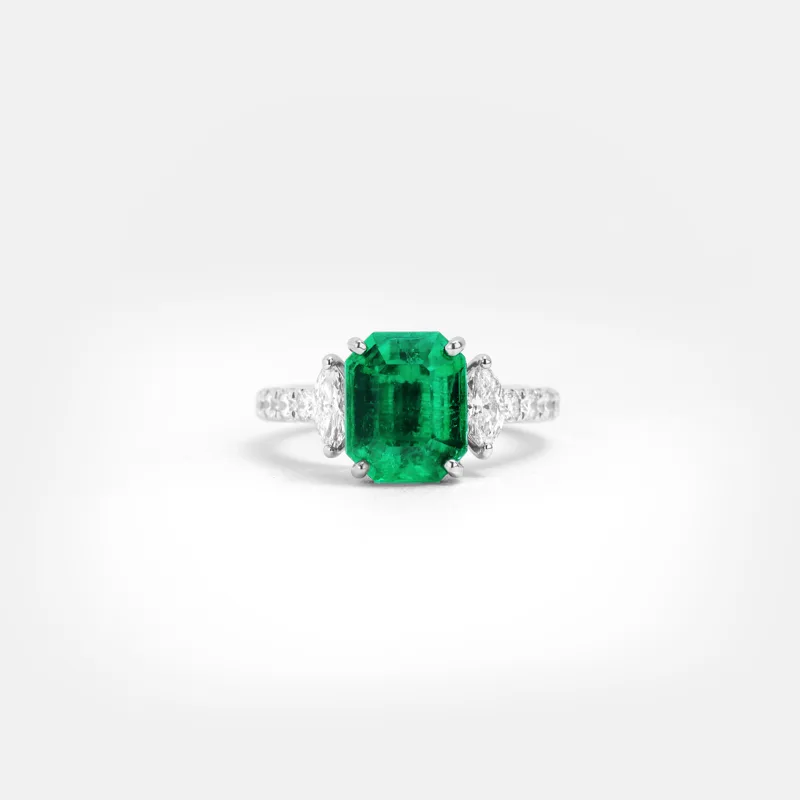
An emerald cut diamond ring stands out for its elongated shape, clipped corners, and long, step-like facets that create broad flashes of light. Unlike brilliant-cut diamonds, which are designed to produce intense sparkle, emerald cuts offer a more understated, mirror-like appearance. This makes them a distinctive choice for engagement rings, anniversary gifts, and anyone who appreciates clean lines and classic jewellery design.
Choosing the right ring involves more than finding a diamond with an attractive shape. Clarity, colour, proportions, and the setting all influence how the finished ring looks and how well it suits your personal style.
What Is an Emerald Cut Diamond Ring?
An emerald cut diamond ring features a diamond with a rectangular outline, cropped corners, and parallel rows of facets arranged in a step-cut pattern. The design creates a clear view into the diamond, highlighting its transparency, symmetry, and internal characteristics.
Although the emerald cut was first associated with emerald gemstones, it has become a popular choice for diamond jewellery. An emerald cut diamond ring suits buyers who appreciate clean lines, balanced proportions, and a sophisticated design that works well with both classic and contemporary styles.
One defining feature is the hall-of-mirrors effect. As the diamond moves, its broad facets reflect light in alternating bright and dark areas, creating depth rather than the rapid flashes associated with many brilliant cuts.
Why Choose an Emerald Cut Diamond Ring?
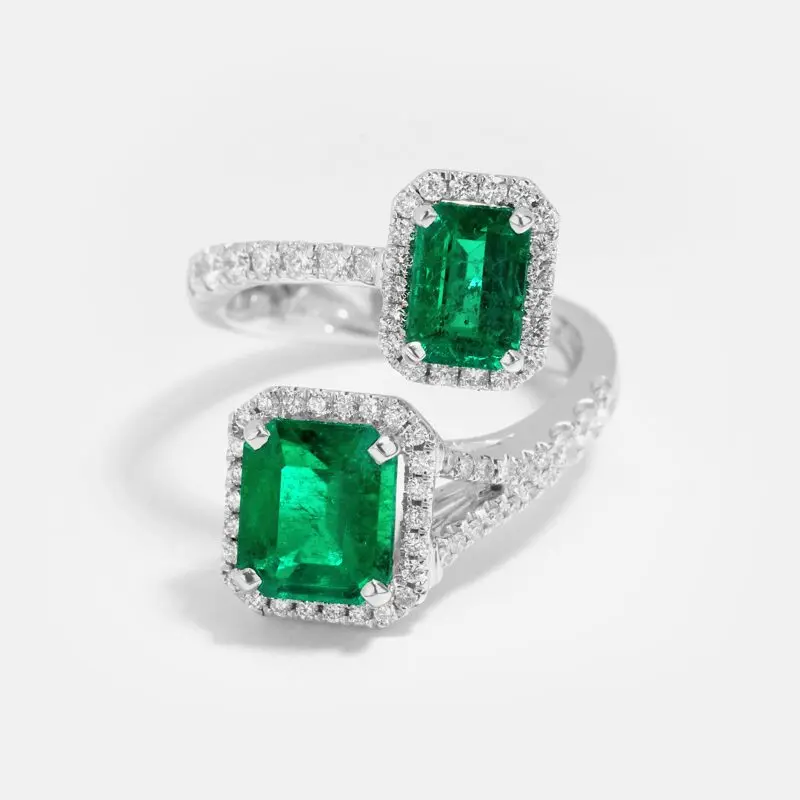
An emerald cut diamond ring offers a different kind of beauty from more traditional diamond shapes. Its appeal comes from the combination of understated brilliance, an elongated silhouette, and a design that can complement many jewellery styles.
Here are four reasons people consider this shape:
- Elegant proportions: The rectangular outline creates a clean, balanced appearance and can make the finger look longer.
- Distinctive light reflection: Broad flashes of light give the diamond a glass-like appearance rather than an abundance of tiny sparkles.
- Versatile styling: Emerald cuts work with solitaire, halo, three-stone, and pavé settings.
- Timeless design: The geometric shape suits both vintage-inspired jewellery and modern engagement rings.
The main consideration is that emerald cuts reveal more of the diamond’s internal characteristics. Buyers should therefore pay close attention to clarity and inspect the actual stone rather than relying entirely on its grading report.
Emerald Cut vs. Cushion Cut vs. Round Brilliant
The best diamond shape depends on whether you prefer understated reflections, softer contours, or intense sparkle. Comparing these popular cuts makes it easier to identify which one suits your taste.
| Feature | Emerald Cut | Cushion Cut | Round Brilliant |
|---|---|---|---|
| Shape | Rectangular with clipped corners | Square or rectangular with rounded corners | Circular |
| Facet style | Step cut | Usually brilliant-style or mixed | Brilliant cut |
| Light appearance | Broad, mirror-like flashes | Bright sparkle with a softer outline | Intense sparkle and fire |
| Clarity visibility | Inclusions may be easier to notice | Facet pattern can help disguise some inclusions | Facet pattern can help disguise some inclusions |
| Overall style | Refined and geometric | Romantic and classic | Traditional and versatile |
| Best suited to | Buyers who appreciate clean lines and subtle brilliance | Buyers who want rounded corners and noticeable sparkle | Buyers who prioritise traditional diamond brilliance |
When comparing an emerald cut diamond ring with cushion and round brilliant designs, consider how each shape handles light. Emerald cuts create broad, mirror-like reflections, cushion cuts generally offer a softer outline with noticeable sparkle, and round brilliant diamonds are known for their intense brilliance.
How to Choose the Right Emerald Cut Diamond Ring
Selecting an emerald cut diamond ring involves balancing its visual appearance with the quality of the stone and the design of the setting. Instead of focusing on carat weight alone, compare the diamond’s proportions, clarity, colour, and overall appearance.
1. Check the Diamond’s Length-to-Width Ratio
The length-to-width ratio describes how long a diamond looks relative to its width. A lower ratio creates a squarer appearance, while a higher ratio produces a more elongated shape.
Neither option is automatically better. The right proportion depends on whether you prefer a compact, balanced outline or a longer silhouette. Compare photographs or videos of individual diamonds from the same viewing angle before deciding.
2. Pay Attention to Clarity
Emerald cuts have large, open facets that can make inclusions easier to see. Clarity is therefore an important consideration when comparing stones.
Look for a diamond that appears clean to the naked eye under normal viewing conditions. A grading report can help you understand its characteristics, but the position and visibility of inclusions matter too. A higher clarity grade may be worthwhile if a visible inclusion distracts from the diamond’s appearance.
3. Consider Colour and Metal Choice
Diamond colour can be more noticeable in an emerald cut than in some brilliant-cut shapes. Compare stones in suitable lighting and consider how the diamond looks against the metal you plan to use.
- White gold or platinum: These metals create a crisp, bright appearance and may make a warmer diamond colour more noticeable.
- Yellow gold: This option creates a warm contrast and can complement a classic or vintage-inspired design.
- Rose gold: Its soft pink tone offers a distinctive look that pairs well with both modern and romantic styles.
Your preferred metal should complement the diamond rather than dictate every other design decision.
4. Choose a Setting That Complements the Shape
The setting influences the ring’s overall appearance, protects the diamond, and affects how much of the stone is visible. Emerald cuts have clipped corners, but those corners still need suitable protection from everyday knocks.
Common options include:
- Solitaire setting: Keeps attention on the centre diamond and its geometric shape.
- Halo setting: Surrounds the centre stone with smaller diamonds to create a brighter, more decorative appearance.
- Three-stone setting: Adds side stones for extra visual interest and a balanced design.
- Pavé setting: Uses small diamonds along the band to introduce additional sparkle.
- Bezel setting: Surrounds the diamond’s edge with metal for a clean, contemporary look.
If you are considering a personalised design, read this guide to the best ring settings for a custom ring. It can help you compare setting styles before deciding how to present your centre diamond.
How Much Should You Spend on an Emerald Cut Diamond Ring?

The price of an emerald cut diamond ring depends on its carat weight, colour, clarity, overall proportions, and setting. Two diamonds with the same carat weight can have different prices and appearances, so comparing stones by weight alone may lead you to overlook a better option.
A practical way to approach your budget is to decide which features matter most before comparing individual rings.
Remember that an attractive diamond does not necessarily need the highest available grade in every category. The goal is to find a combination of quality, appearance, and price that works for you.
A Practical Example: Choosing Between Two Emerald Cuts
Imagine comparing two emerald cut diamonds with the same carat weight. The first has a slightly longer outline but contains an inclusion visible near the centre. The second has a more balanced shape and an inclusion that is difficult to notice without magnification.
Although both diamonds may have similar headline specifications, the second could be more appealing in everyday wear because its visible appearance better matches your preferences.
This example illustrates why photographs, videos, and in-person inspection can be useful when available. Review the diamond from several angles, observe how its light pattern changes as it moves, and compare its appearance with the grading report before making a decision.
How to Care for an Emerald Cut Diamond Ring
Regular care helps an emerald cut diamond ring maintain its appearance over time. Soap residue, hand cream, and everyday dirt can collect on the stone and reduce its brightness, so gentle cleaning and periodic checks of the setting are important parts of jewellery maintenance.
Follow these basic care practices:
- Clean the ring gently with a suitable jewellery-cleaning method.
- Avoid exposing the ring to harsh chemicals or unnecessary physical impact.
- Have the setting checked periodically to identify loose prongs or other signs of wear.
- Store the ring separately from other jewellery to reduce the risk of scratches.
- Remove the ring during activities where it could be knocked, snagged, or exposed to abrasive materials.
Find Your Emerald Cut Diamond Ring at Aary Jewellery
An emerald cut diamond ring combines geometric design, broad light reflections, and timeless appeal. The right choice comes down to the diamond’s proportions, clarity, colour, and setting, as well as the way these details work together in the finished ring.
Take time to compare different designs and consider how each one fits your style and budget. Explore the Aary Jewellery ring collection for inspiration, or visit Aary Jewellery to discover jewellery styles that suit your preferences.
FAQs (Frequently Ask Questions)
Is an emerald cut diamond ring good for an engagement ring?
Yes. An emerald cut diamond ring is a popular style for people who prefer geometric lines, understated brilliance, and an elegant appearance. A suitable setting can make the design feel traditional, modern, or vintage-inspired.
Does an emerald cut diamond sparkle?
Yes, but its light performance looks different from that of a round brilliant diamond. Emerald cut diamond ring produce broad flashes and mirror-like reflections rather than the intense, scattered sparkle associated with brilliant cuts.
What clarity is best for an emerald cut diamond?
The best clarity depends on the individual stone and your budget. Since inclusions may be easier to see through an emerald cut’s open facets, prioritise a diamond that looks clean to the naked eye and review its grading report before purchasing.
Does an emerald cut diamond ring look bigger than a round diamond?
An elongated emerald cut can appear longer than a round diamond of comparable carat weight. However, the visible size depends on the stone’s actual dimensions and proportions, so compare measurements rather than relying on carat weight alone.
Which setting is best for an emerald cut diamond ring?
A solitaire setting highlights the diamond’s shape, while a halo or pavé setting adds extra sparkle. Bezel and other protective settings can offer a different balance of style and security. The best choice depends on your design preferences and how you plan to wear the ring.