

A cushion cut diamond ring features a diamond with a square or rectangular outline, softly rounded corners, and facets designed to reflect light. Its pillow-like shape gives it a distinctive appearance that balances traditional elegance with modern style. Whether you are choosing an engagement ring or looking for a piece of fine jewellery to mark a special occasion, understanding the diamond’s proportions, sparkle, and setting can help you make a more confident decision.
What Is a Cushion Cut Diamond Ring?
A cushion cut diamond ring combines a cushion-shaped diamond with a metal setting that holds the stone securely in place. The diamond’s rounded corners distinguish it from sharper square shapes, while its facet arrangement influences how it reflects light.
A cushion cut diamond ring is particularly appealing to people who want a ring that feels classic without looking overly traditional. It can suit vintage-inspired designs, minimalist solitaires, and elaborate settings with smaller accent diamonds.
Why Choose a Cushion Cut Diamond Ring?
A cushion cut diamond ring offers several characteristics that make it worth considering when comparing diamond shapes.
1. A Soft, Timeless Shape
The rounded corners give the cushion cut a softer outline than a square princess cut. Its proportions can look either compact and square or slightly elongated, depending on the diamond selected.
This versatility makes it suitable for different jewellery styles, from delicate engagement rings to more decorative designs.
2. Distinctive Sparkle
Cushion cut diamonds are available in different facet arrangements, which affect their appearance under light. Some produce larger, more defined flashes, while others create a finer, scattered sparkle often described as a crushed-ice effect.
Neither appearance is automatically better. The right choice depends on whether you prefer bold flashes of light or a more intricate pattern across the diamond’s surface.
3. Versatile Ring Designs
The cushion shape works with several settings, including solitaire, halo, and pavé designs. A simple setting keeps attention on the centre diamond, while additional smaller stones can create a more decorative look.
If you are comparing different styles before making a purchase, browse Aary Jewellery’s collection of rings to explore designs that may suit your preferences.
Cushion Cut vs Round Cut vs Princess Cut
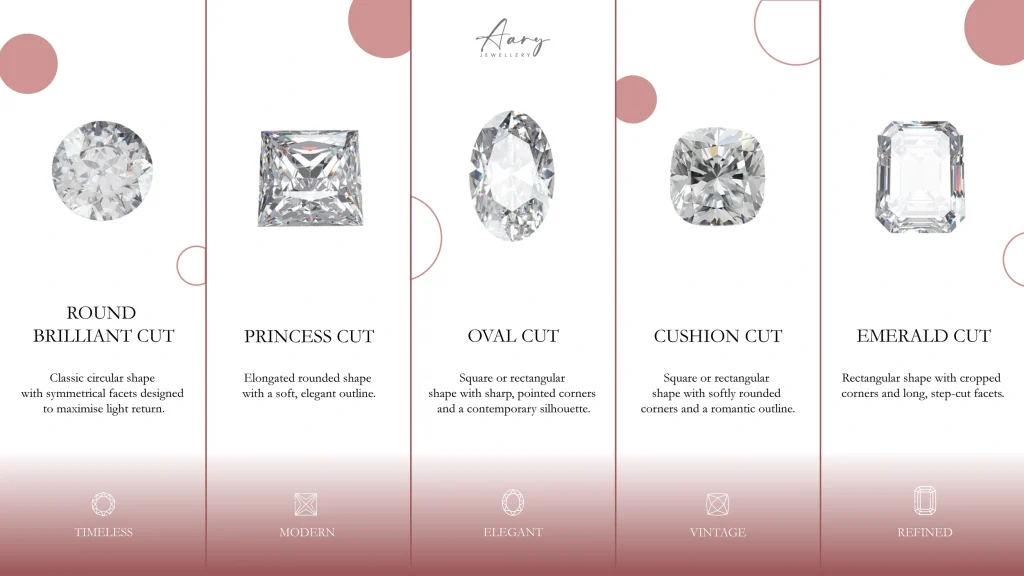
Choosing a diamond shape becomes easier when you understand how the main options differ. Cushion, round, and princess cuts have distinct outlines and visual characteristics, even when their carat weights are similar.
| Feature | Cushion Cut | Round Brilliant | Princess Cut |
|---|---|---|---|
| Shape | Square or rectangular with rounded corners | Circular | Square with pointed corners |
| Overall appearance | Soft, classic, and sometimes vintage-inspired | Traditional and versatile | Geometric and contemporary |
| Sparkle pattern | Varies from broad flashes to crushed-ice effects | Typically bright, balanced brilliance | Sharp, lively flashes of light |
| Design versatility | Works with classic and decorative settings | Suits nearly any ring style | Complements modern, angular designs |
| Best suited to | Buyers who prefer rounded corners and varied sparkle | Buyers who favour a familiar, brilliant appearance | Buyers who prefer a defined square silhouette |
The visual differences come from both the diamond’s outline and its facet arrangement. GIA explains that diamond shape and cut are not the same thing: shape describes the outline, while cut relates to the stone’s proportions and craftsmanship.
How to Choose the Right Cushion Cut Diamond Ring
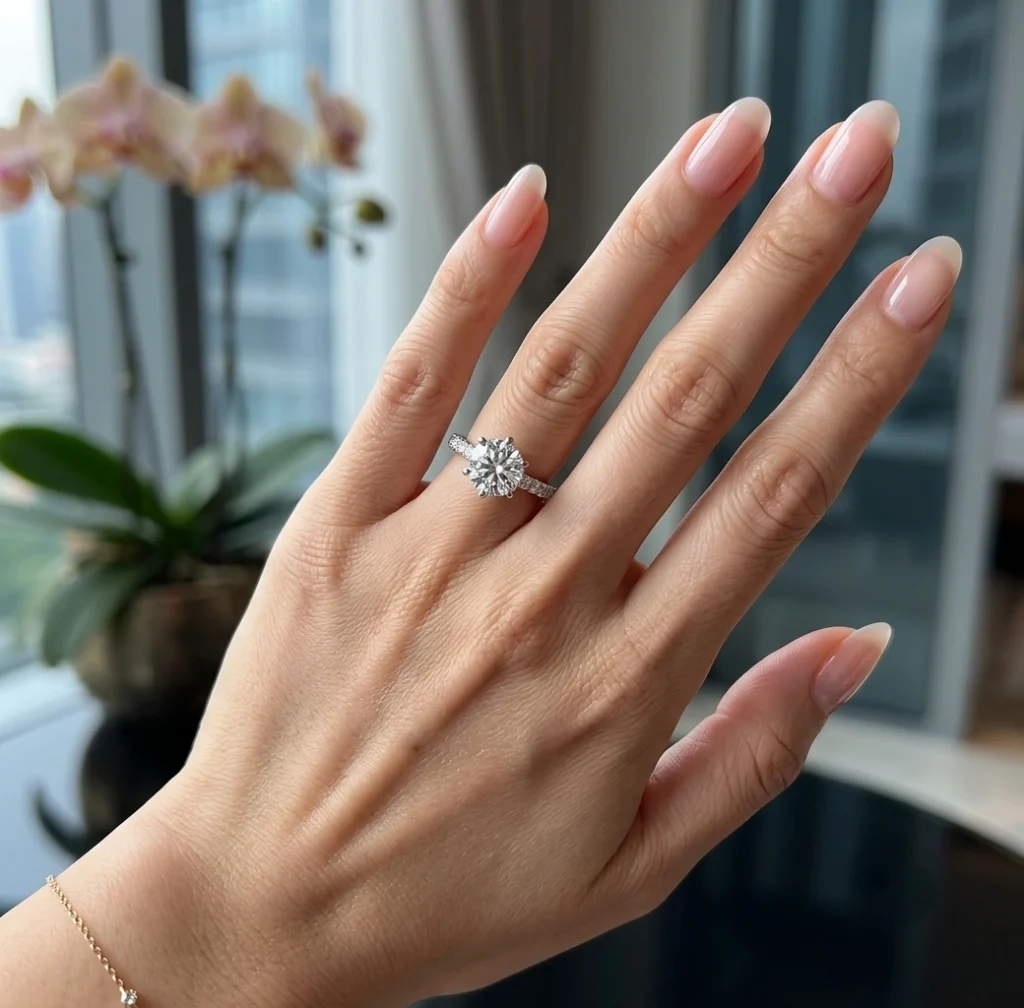
Selecting a cushion cut diamond ring involves more than deciding whether you prefer a square or rectangular stone. The diamond’s appearance, quality, and setting all contribute to the finished piece.
1. Decide Between Square and Elongated Proportions
Square cushion cuts have a balanced outline, while elongated cushion cuts have a more rectangular appearance.
A square diamond may appeal to someone who prefers symmetry and a compact centre stone. An elongated cushion can create a longer visual line across the finger.
Neither proportion is universally better. Compare the diamond’s length-to-width ratio and, more importantly, how its outline looks when viewed from above.
2. Compare the Facet Patterns
Cushion cut diamond ring can have different facet arrangements, including brilliant and modified brilliant styles.
- Brilliant cushion: Often displays larger, more defined flashes of light.
- Modified cushion: May feature additional facets that create a finer, crushed-ice appearance.
Lighting can influence what you see, so inspect the diamond under more than one lighting condition if possible. Look for an appealing balance of brightness and contrast rather than assuming that more visible sparkle always means better quality.
3. Evaluate Colour and Clarity
Colour describes how much body colour is visible in a diamond, while clarity refers to internal characteristics and surface imperfections.
The cushion shape can show colour differently from a round brilliant, so compare stones side by side rather than relying on a grading label alone. Similarly, check whether inclusions are visible to the naked eye and whether they affect the diamond’s overall appearance.
A grading report from a recognised gemological laboratory can help you understand a diamond’s characteristics. However, the report should complement, not replace, a visual assessment of the stone.
4. Choose a Secure Setting
Cushion cut diamonds have rounded corners, but the shape still needs a suitable setting to protect the stone and keep it secure.
Popular options include:
- Solitaire setting: Keeps the centre diamond as the main focus.
- Halo setting: Surrounds the centre stone with smaller diamonds for a more decorative appearance.
- Pavé setting: Adds small diamonds along the band for extra detail.
- Bezel setting: Uses a metal rim around the diamond’s edge and can provide additional protection.
Your choice should reflect your preferred style, daily activities, and maintenance expectations. A jeweller can help assess which setting suits the particular diamond and ring design.
How Much Should You Spend on a Cushion Cut Diamond Ring?
The cost of a cushion cut diamond ring depends on several factors, including carat weight, colour, clarity, cut quality, and the ring’s setting. Two diamonds with the same carat weight can have noticeably different prices because their characteristics and overall appearance may differ.
Before choosing a ring, consider these factors:
- Carat weight: Larger diamonds generally cost more, although carat weight alone does not determine a diamond’s value.
- Colour and clarity: Higher grades can increase the price, but the visual difference between grades may not always be obvious without close inspection.
- Diamond appearance: Compare how each cushion cut reflects light, including its brightness, contrast, and facet pattern.
- Setting and metal: A simple solitaire setting may have a different overall cost from a halo or pavé design with additional diamonds.
- Certification: A grading report from a recognised gemological laboratory helps you verify the diamond’s stated characteristics.
A practical approach is to decide on a comfortable budget before comparing individual stones. Then prioritise the characteristics that matter most to you, such as the diamond’s shape, visible sparkle, or the design of the band. This makes it easier to compare options without paying extra for features that do not significantly affect your personal preference.
A Practical Example: Choosing Between Two Cushion Cuts
Imagine comparing two cushion cut diamonds with the same carat weight. One has a square outline and broad flashes of light, while the other is slightly elongated and displays a finer, crushed-ice pattern.
The first may appeal to someone who wants a balanced, traditional appearance. The second may suit someone who prefers a longer silhouette and a more intricate sparkle pattern.
Even though both diamonds have the same carat weight, they can look noticeably different. This is why it helps to compare the measurements, proportions, and appearance of individual stones rather than selecting by carat weight alone.
How Do You Care for a Cushion Cut Diamond Ring?
Regular care helps maintain the appearance of your cushion cut diamond ring. Remove it before activities that may expose it to harsh chemicals or physical impact, and store it separately from other jewellery to prevent scratches. For everyday maintenance, use a soft cloth and a suitable jewellery-cleaning method.
If you are planning a personalised design, explore a custom diamond ring in Singapore to discover options that suit your preferred diamond shape and setting.
Conclusion: Find Your Cushion Cut Diamond Ring at Aary Jewellery
A cushion cut diamond ring offers a distinctive combination of rounded corners, versatile proportions, and varied sparkle patterns. The best choice depends on how the diamond looks to you, the quality of its characteristics, and whether its setting suits your style and everyday needs.
Before making a decision, compare square and elongated proportions, examine the diamond’s facet pattern, and consider how different settings change the overall appearance. Taking time to evaluate these details can help you choose a ring that remains meaningful beyond the occasion for which it was purchased.
Explore the jewellery collections at Aary Jewellery for more inspiration as you consider a design that reflects your personal style.
FAQs (Frequently Ask Questions)
Is a cushion cut diamond ring suitable for an engagement ring?
Yes. A cushion cut diamond ring can make a distinctive engagement ring because its rounded corners combine a soft outline with a classic diamond appearance. It works with solitaire, halo, and other settings, depending on the style you prefer.
Does a cushion cut diamond ring sparkle as much as a round diamond?
Both shapes can display attractive brilliance, but their sparkle patterns differ. Round brilliant diamonds are known for their balanced brilliance, while cushion cuts can show broader flashes or a crushed-ice effect, depending on their facet arrangement.
Does a cushion cut diamond ring look bigger than a round diamond?
Not necessarily. The face-up size depends on the diamond’s actual measurements and proportions, not just its carat weight. Compare dimensions in millimetres to understand how much surface area each stone presents when viewed from above.
Which setting is best for a cushion cut diamond ring?
There is no single best setting for every cushion cut diamond ring. A solitaire highlights the centre stone, a halo adds decorative detail, and a bezel setting surrounds the diamond’s edge with metal. The right choice depends on appearance, comfort, and the security of the setting.
Is a cushion cut diamond ring difficult to maintain?
Routine maintenance is generally straightforward when the ring has a secure setting and compatible materials. Gentle cleaning can remove everyday residue, while professional inspections help identify loose stones or worn prongs before they become more serious problems.