
Diamond Light Performance Explained
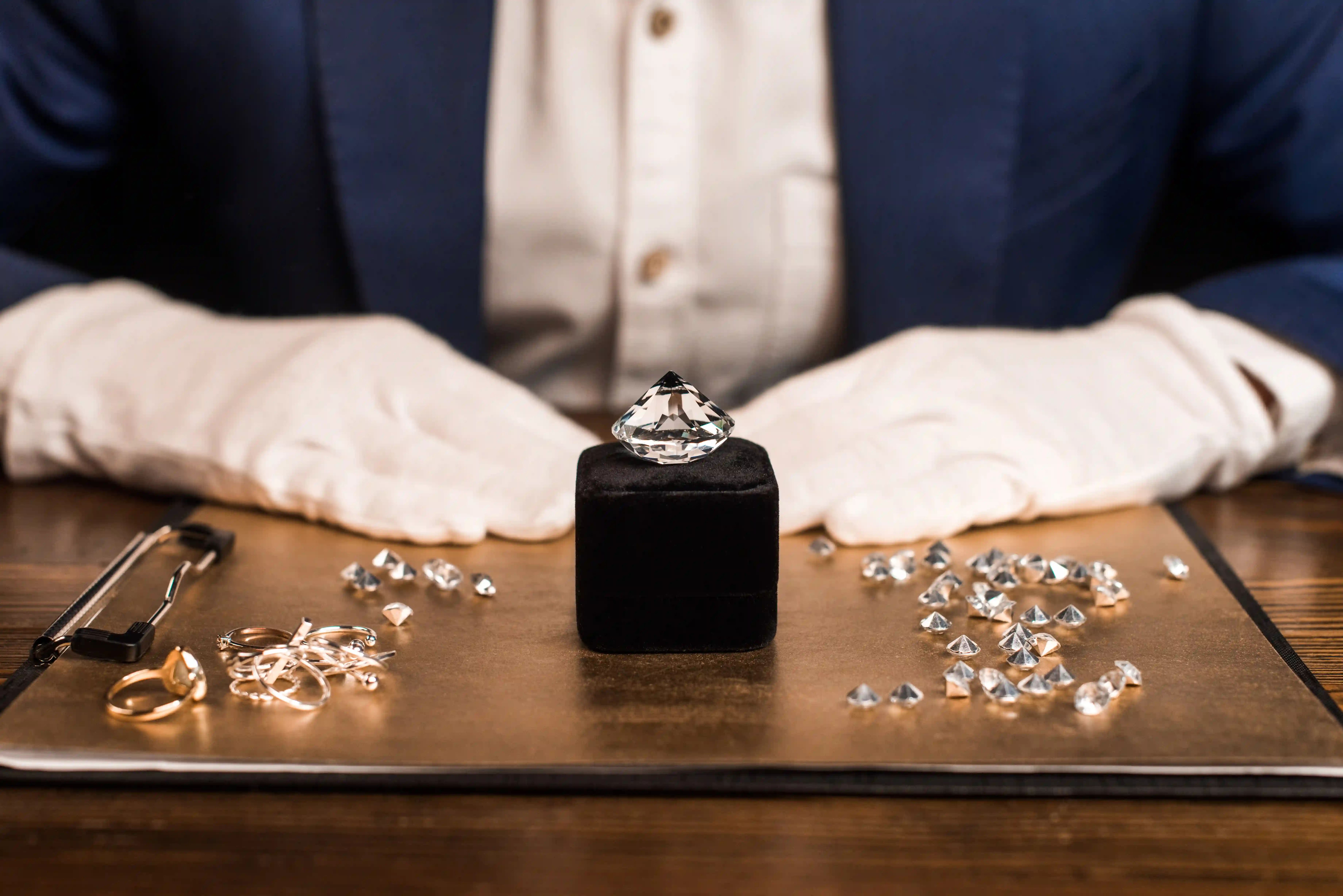
Diamond light performance explained refers to how a diamond interacts with light to produce the sparkle and brilliance that people admire in fine jewellery. When light enters a diamond, it reflects, refracts, and disperses through the stone’s facets. The quality of this interaction determines how bright, fiery, and lively the diamond appears.
In simple terms, light performance is the science behind a diamond’s sparkle. Even a large diamond may appear dull if it has poor light performance, while a smaller diamond with excellent light performance can look far more brilliant.
Three main visual effects define diamond light performance:
- Brilliance – white light reflected from the diamond
- Fire – flashes of rainbow colors
- Scintillation – sparkle when the diamond moves
Jewellery experts often say that cut quality is the most important factor influencing light performance, even more than diamond size.
Pro Tip: When choosing a diamond, prioritize excellent cut grading because it maximizes light return and brilliance.
Why Light Performance Is the Most Important Diamond Quality Factor
Many first-time diamond buyers assume carat size determines beauty, but professionals in the jewellery industry know that light performance determines visual brilliance.
How Diamonds Interact With Light
When light enters a diamond, several optical events occur:
- Refraction – light bends as it enters the diamond
- Reflection – light bounces between internal facets
- Dispersion – white light separates into rainbow colors
- Return to the eye – light exits the diamond as sparkle
A well-cut diamond returns most of the light back to the viewer’s eye, creating exceptional brilliance.
Visual: Basic Diamond Light Behavior
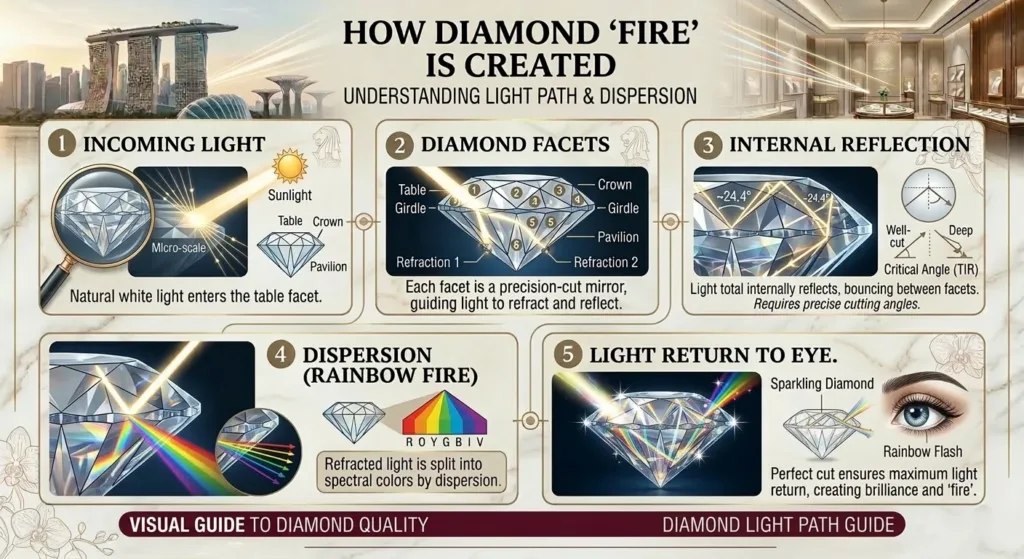
Poorly cut diamonds allow light to escape from the bottom or sides, reducing sparkle.
Pro Tip: A diamond with excellent light performance often appears larger and brighter than its carat weight suggests.
The Three Core Elements of Diamond Light Performance
Understanding these three elements helps buyers evaluate diamonds more confidently.
1. Brilliance (White Light Reflection)
Brilliance refers to the amount of white light reflected back to the viewer.
High brilliance means:
- The diamond appears bright and lively
- Light returns evenly across the surface
- The stone looks visually vibrant
Brilliance is strongly influenced by facet alignment and cut precision.
Pro Tip: Round brilliant cut diamonds are engineered specifically to maximize brilliance.
2. Fire (Color Dispersion)
Fire describes the rainbow flashes that appear when light disperses into different colors inside the diamond.
These colorful flashes are created by dispersion, which splits white light into spectral colors.
Diamonds with strong fire often show:
- Red flashes
- Blue flashes
- Yellow and green sparkles
Fire is more noticeable under spot lighting or sunlight.
Pro Tip: Diamonds with precise facet angles tend to produce more dramatic fire effects.
3. Scintillation (Sparkle During Movement)
Scintillation refers to the sparkle you see when the diamond moves or when the light source shifts.
It includes two main visual effects:
- Sparkle flashes as the diamond moves
- Contrast patterns between light and dark facets
This dynamic sparkle is what makes diamonds appear alive and energetic.
Pro Tip: Diamonds with excellent symmetry produce balanced scintillation patterns, creating more captivating sparkle.
How Diamond Cut Determines Light Performance
Among the famous 4Cs of diamonds (Cut, Color, Clarity, Carat), cut has the greatest impact on light performance. This is especially important when comparing branded diamonds to standard ones, see Lazare diamond vs standard diamond for a deeper breakdown.
Why Cut Matters Most
The cut determines how well the diamond reflects and returns light.
| Cut Quality | Light Performance | Visual Effect |
|---|---|---|
| Excellent | Maximum light return | Bright, brilliant sparkle |
| Very Good | Slightly less light reflection | Still visually attractive |
| Good | Moderate sparkle | Noticeable light leakage |
| Fair / Poor | Significant light loss | Diamond appears dull |
A diamond with a poor cut may leak up to 80% of incoming light, dramatically reducing sparkle.
Scientific Tools Used to Evaluate Diamond Light Performance
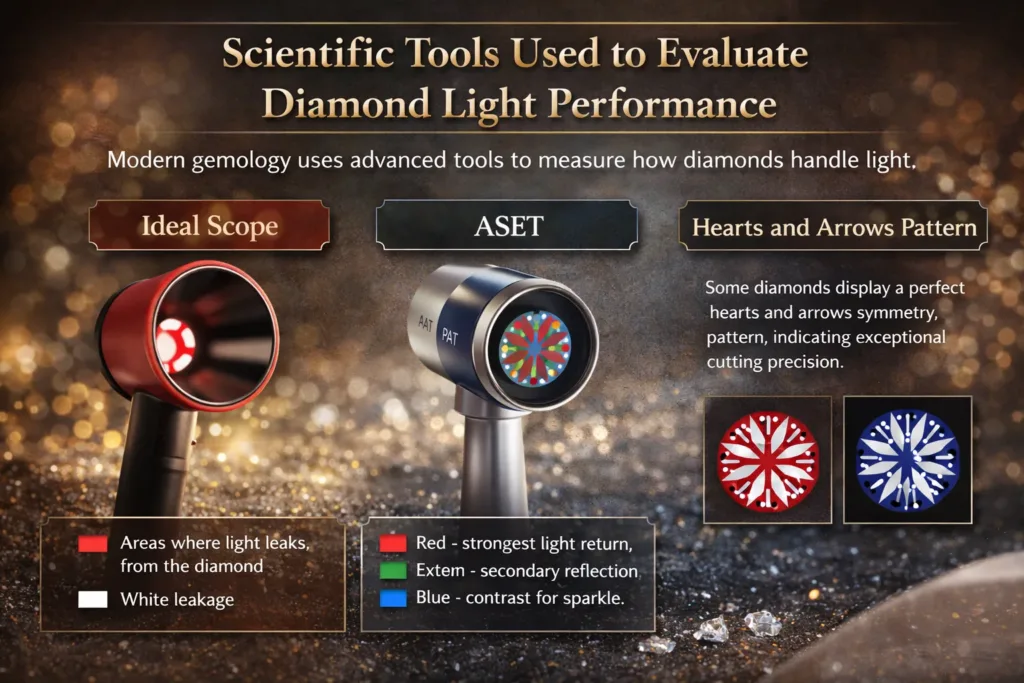
Modern gemology uses advanced tools to measure how diamonds handle light.
1. Ideal Scope
The Ideal Scope reveals areas where light leaks from the diamond.
- Red areas = strong light return
- White areas = light leakage
2. ASET (Angular Spectrum Evaluation Tool)
ASET imaging analyzes light reflection angles and brilliance distribution.
Typical color indicators:
- Red = strongest light return
- Green = secondary reflection
- Blue = contrast for sparkle
3. Hearts and Arrows Pattern
Some diamonds display a perfect hearts and arrows symmetry pattern, indicating exceptional cutting precision.
Many luxury diamond brands focus heavily on optimizing these optical qualities.
For example, buyers researching high-performance diamonds often explore resources like Lazare diamond review Singapore to understand how specific brands engineer superior light performance.
Example: How Light Performance Changes Diamond Appearance
Consider two diamonds:
| Diamond | Carat | Cut Quality | Visual Appearance |
|---|---|---|---|
| Diamond A | 1.0 ct | Poor cut | Dull, limited sparkle |
| Diamond B | 0.8 ct | Excellent cut | Extremely bright |
Even though Diamond A is larger, Diamond B often looks more beautiful because it returns more light. This is why jewellery experts emphasize cut quality over size.
Pro Tip: If you want maximum sparkle within budget, choose excellent cut with slightly lower carat weight.
Simple Guide: How to Identify Diamonds With Great Light Performance
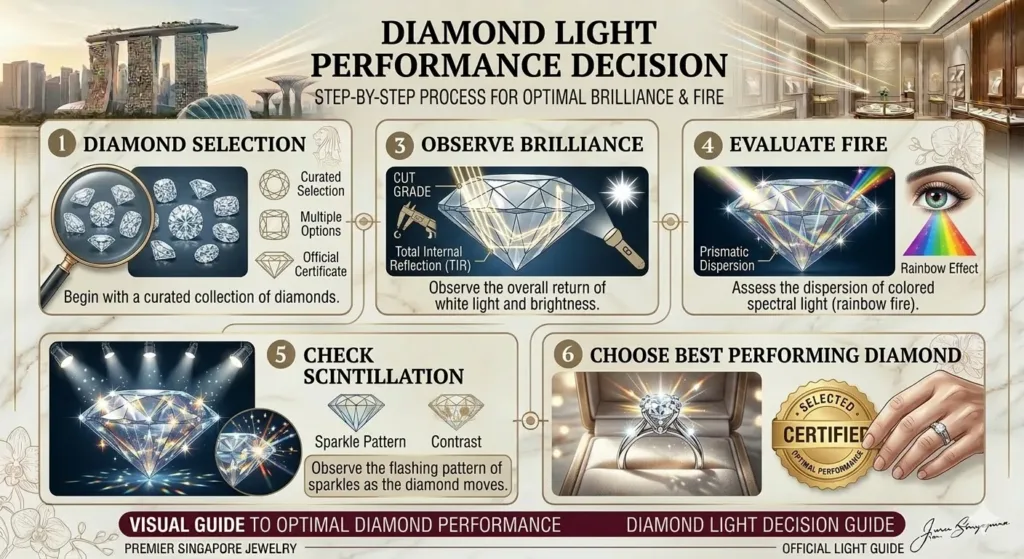
Follow these steps when evaluating a diamond.
Step-by-Step Diamond Evaluation
- Check the cut grade
Look for Excellent or Ideal cut ratings.
- Observe the diamond under different lighting
- sunlight
- indoor lighting
- spotlight environments
- Look for sparkle distribution
Sparkle should appear evenly across the stone.
- Request light performance images
Ask for Ideal Scope or ASET images when possible.
- Compare multiple diamonds
Viewing side-by-side comparisons makes differences clearer.
Diamond Light Performance Decision Diagram
Pro Tip: The best diamonds look bright even in low lighting, not just under showroom lights.
Conclusion: Understanding Diamond Sparkle Before Choosing the Perfect Stone
Now that you understand diamond light performance explained, it becomes easier to see why sparkle is not determined by size alone. The brilliance, fire, and scintillation of a diamond all depend heavily on precision cutting and light reflection.
When evaluating diamonds, remember these key principles:
- Cut quality determines sparkle
- Excellent light return creates brilliance
- Balanced fire and scintillation produce visual beauty
For anyone planning to purchase fine jewellery or an engagement ring, understanding light performance helps ensure you choose a diamond that truly stands out.
At Aary Jewellery, our expertise in diamond craftsmanship and optical performance ensures that every diamond is selected for its brilliance, precision cutting, and exceptional beauty. Explore expert insights and diamond reviews to make an informed decision before choosing your perfect stone.
A diamond’s true beauty lies not just in its size, but in how brilliantly it captures and reflects light.
FAQs (Frequently Asked Questions)
What does diamond light performance mean?
Diamond light performance refers to how well a diamond reflects, refracts, and disperses light, creating brilliance, fire, and sparkle.
Is diamond light performance more important than carat size?
Yes. A smaller diamond with excellent light performance can look brighter and more attractive than a larger poorly cut diamond.
Which diamond shape has the best light performance?
The round brilliant cut generally offers the best light performance because its 58 facets are designed to maximize light reflection.
How can I tell if a diamond has good sparkle?
Look for strong brilliance, visible rainbow flashes, and dynamic sparkle when the diamond moves.
Do all diamonds sparkle the same way?
No. Sparkle varies depending on cut quality, symmetry, and facet alignment.