
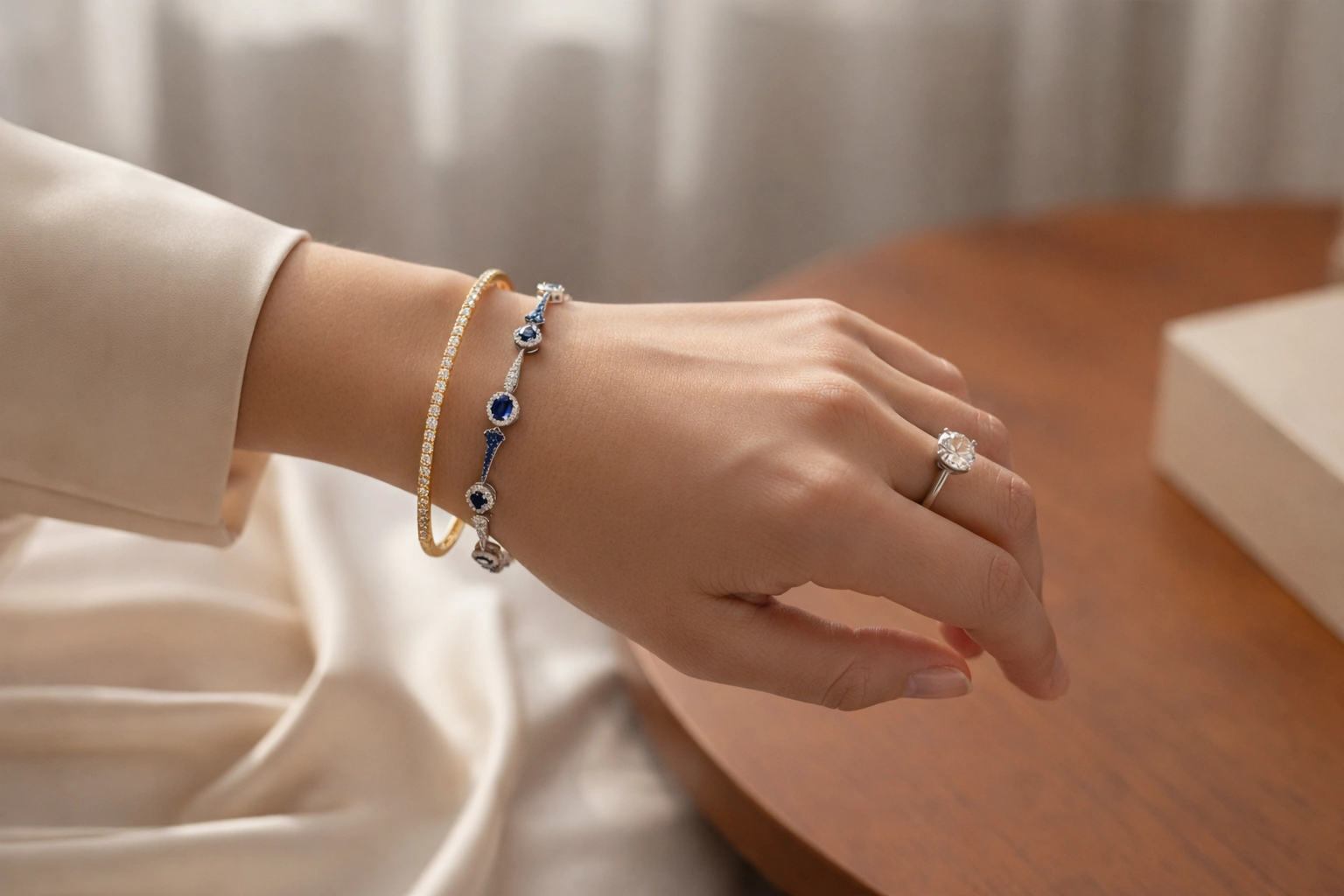
A diamond bracelet buying guide is a practical reference that helps buyers understand how diamond bracelets are designed, graded, priced, and worn in real life. It explains the key factors, diamond quality, bracelet styles, metal types, sizing, and craftsmanship, so buyers can make confident decisions without guessing or overpaying.
We put this guide together because, in our experience, most people don’t struggle with liking diamond bracelets. They struggle with choosing the right one. There are too many styles, too many technical terms, and too much sales talk. So we decided to slow things down and explain it properly, step by step, the way we usually explain it to our own clients.
Understanding Diamond Bracelets Before You Buy
A diamond bracelet is not just a line of diamonds wrapped around the wrist. It’s a moving piece of jewellery, something we actually live with day to day. It bends, twists, and gets worn far more often than rings or pendants, and that’s exactly why a proper diamond bracelet buying guide matters. Quality and construction play a much bigger role than most people expect, especially once the bracelet leaves the display case and becomes part of real life.
In general, diamond bracelets fall into a few broad categories, but before getting into styles, it helps to understand what actually makes a bracelet “good” versus just shiny.
We usually look at three big things first:
- How the diamonds are matched
- How secure the setting is
- How comfortable it feels when worn for hours
If any of these are off, even a high-carat bracelet can feel disappointing over time.
Common Diamond Bracelet Styles Explained
Tennis Bracelets
Tennis bracelets are probably the most recognisable diamond bracelets in the world, and they’re often the first style mentioned in any diamond bracelet buying guide. They feature a continuous row of diamonds, usually matched in size and quality, creating a clean, balanced look that works just as well for everyday wear as it does for special occasions.
Why people choose them:
- They work with casual and formal outfits
- They sit flat on the wrist
- They never really go out of style
The downside? Because they use many diamonds, consistency matters. One slightly dull stone can stand out.
Diamond Bangles
Diamond bangles are rigid bracelets, often round or oval. Some are fully set with diamonds, others use diamonds as accents.
Best for:
- Structured, statement looks
- Occasional wear
- Layering with other bangles
They tend to feel heavier, which some people love, others don’t.
Chain Diamond Bracelets
Chain diamond bracelets use diamonds spaced along a chain instead of a full, uninterrupted row. In many cases, this style is highlighted in a diamond bracelet buying guide as a more relaxed and approachable option. They’re lighter on the wrist, feel more casual, and are usually easier on the budget, which is why we often recommend them as a first diamond bracelet or as an everyday piece that doesn’t feel too precious to wear.
Diamond Quality: What Really Matters in Bracelets
Most buyers know about the 4Cs cut, color, clarity, and carat but bracelets work a bit differently from rings, which is why this point is often emphasised in a proper diamond bracelet buying guide. Because diamonds sit side by side and move constantly on the wrist, balance and consistency usually matter more than chasing the highest grades on paper.
Cut
Cut is still the most important factor, and it’s something we stress early in any diamond bracelet buying guide. Well-cut diamonds reflect light evenly across the wrist, creating that continuous sparkle people expect. Poor cuts, on the other hand, tend to look flat or dull, especially when seen in natural lighting.
Color
When it comes to color, bracelets usually perform best within a narrow range, a detail often overlooked without a clear diamond bracelet buying guide. Mixed tones become more obvious when diamonds sit side by side, which can break the overall harmony of the bracelet even if individual stones look fine on their own.
Clarity
Bracelets are viewed from a distance, so ultra-high clarity is often unnecessary. Clean-looking diamonds matter more than technical grades.
Total Carat Weight
Diamond bracelets are measured by total carat weight (TCW), not individual stones, and this distinction comes up often in any honest diamond bracelet buying guide. A well-balanced spread across the wrist usually looks better than simply chasing big carat numbers without considering proportion and flow.
Choosing the Right Metal for a Diamond Bracelet
Metal choice affects both appearance and durability.
Common options include:
- 18K white gold for a clean, modern look
- Yellow gold for warmth and contrast
- Rose gold for softer, contemporary tones
- Platinum for strength and long-term wear
We usually recommend metals based on lifestyle, not trends. Someone who wears their bracelet daily needs something durable and easy to maintain.
Bracelet Size: Why It’s More Important Than You Think
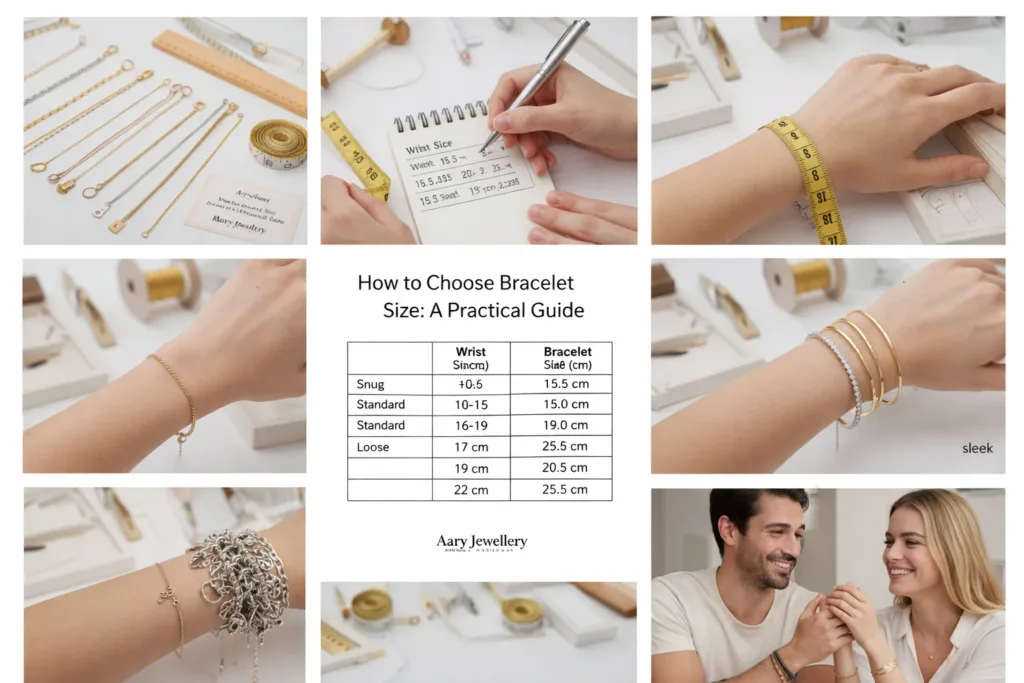
Sizing is one of the most overlooked parts of buying a diamond bracelet. A bracelet that’s too tight feels uncomfortable. Too loose, and it twists or catches on things.
We always suggest measuring properly and understanding fit preferences before buying. This guide on how to choose bracelet size explains the process in detail and helps avoid common sizing mistakes.
Diamond Bracelet Settings and Security
Bracelets move a lot, so settings matter.
Common settings include:
- Prong settings for maximum sparkle
- Bezel settings for added protection
- Channel settings for clean lines
- Pavé settings for dense brilliance
From what we’ve seen, lost stones usually come from weak or rushed setting work, not bad diamonds.
Certification and Authenticity
A reliable diamond bracelet should come with proper documentation, especially for higher-value pieces.
Look for:
- GIA or IGI diamond reports
- Clear metal specifications
- Transparent workmanship details
According to industry data, certified diamonds consistently retain higher resale value than uncertified ones, even when visual quality appears similar.
How We Evaluate Diamond Bracelets at Aary Jewellery
At Aary Jewellery, we specialise in fine diamond jewellery with an emphasis on craftsmanship, stone matching, and long-term wearability.
Our internal evaluation process includes:
- Diamond matching for color and brilliance
- Setting inspection under magnification
- Flexibility and movement testing
- Clasp and lock security checks
- Final visual balance assessment
It’s not glamorous work, but it prevents long-term disappointment.
Diamond Bracelet Buying Guide: Pricing Reality Check
Bracelet prices vary widely. Two bracelets with similar carat weight can differ significantly in price due to:
- Diamond cut quality
- Consistency between stones
- Metal purity
- Setting craftsmanship
In our experience, buyers who focus only on carat weight often regret it later.
Conclusion: Choosing a Diamond Bracelet With Confidence
Buying a diamond bracelet should feel exciting, not stressful, and that’s exactly the mindset behind any good diamond bracelet buying guide. The right piece fits comfortably, sparkles naturally, and suits how you actually live, not just how it looks sitting perfectly still in a display.
At Aary Jewellery, we believe a good diamond bracelet is the result of thoughtful choices, not shortcuts. If you’re ready to explore expertly crafted diamond bracelets or want personalised guidance, visit our website and let us help you find something that truly lasts.
FAQs (Frequently Asked Questions)
What is the best diamond bracelet for everyday wear?
Tennis bracelets with secure prong or bezel settings are usually the most practical for daily use.
How many carats should a diamond bracelet have?
Most buyers choose between 2 and 8 total carats, depending on wrist size and style preference.
Are diamond bracelets a good investment?
High-quality, well-made bracelets with certified diamonds tend to hold value better over time.
Do diamond bracelets need regular maintenance?
Yes. Annual inspections help prevent loose stones and clasp issues
Can diamond bracelets be resized?
Some styles can be adjusted, but not all. It depends on design and setting structure