
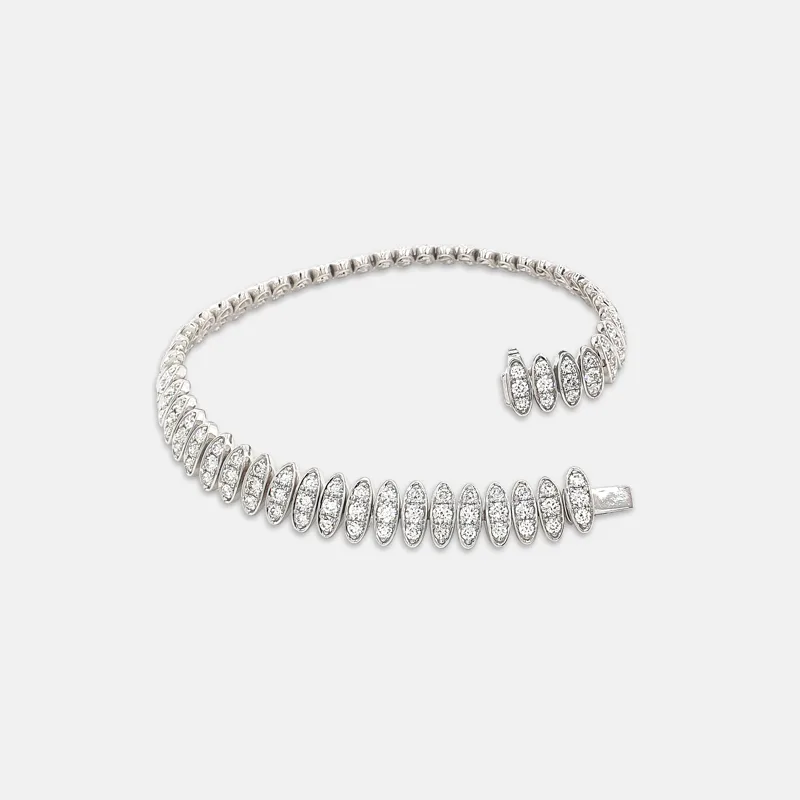
Choosing a bracelet should be fun, not stressful. Yet many people end up with a bracelet that’s too tight, too loose, or just feels… off. If you’ve ever ordered one online and thought, “why doesn’t this sit right on my wrist?”, you’re not alone.
This guide explains how to choose bracelet size properly, using real measurements, common sense, and a bit of lived experience from fine jewellery work. No guesswork, no confusing charts that don’t explain anything.
We’ll walk through it slowly, the way a jeweller would explain it across a counter, not in a rush.
What Does “Bracelet Size” Actually Mean?
Before measuring anything, it helps to know what bracelet size really refers to.
Bracelet size is the internal circumference of the bracelet, usually measured in centimeters or inches. It’s not the length of the chain laid flat, and it’s definitely not the wrist size alone.
In most fine jewellery contexts, the final bracelet size is:
Wrist measurement + comfort allowance
That comfort part is what many people forget.
Why Bracelet Sizing Matters More Than You Think
A bracelet is one of the few jewellery pieces that moves constantly. It slides, rotates, and rests against bone. A wrong size isn’t just uncomfortable, it can also:
- Wear out clasps faster
- Cause chain tension or bending
- Make diamonds or charms flip awkwardly
- Increase the risk of slipping off
In high-value bracelets, even a half-centimeter matters.
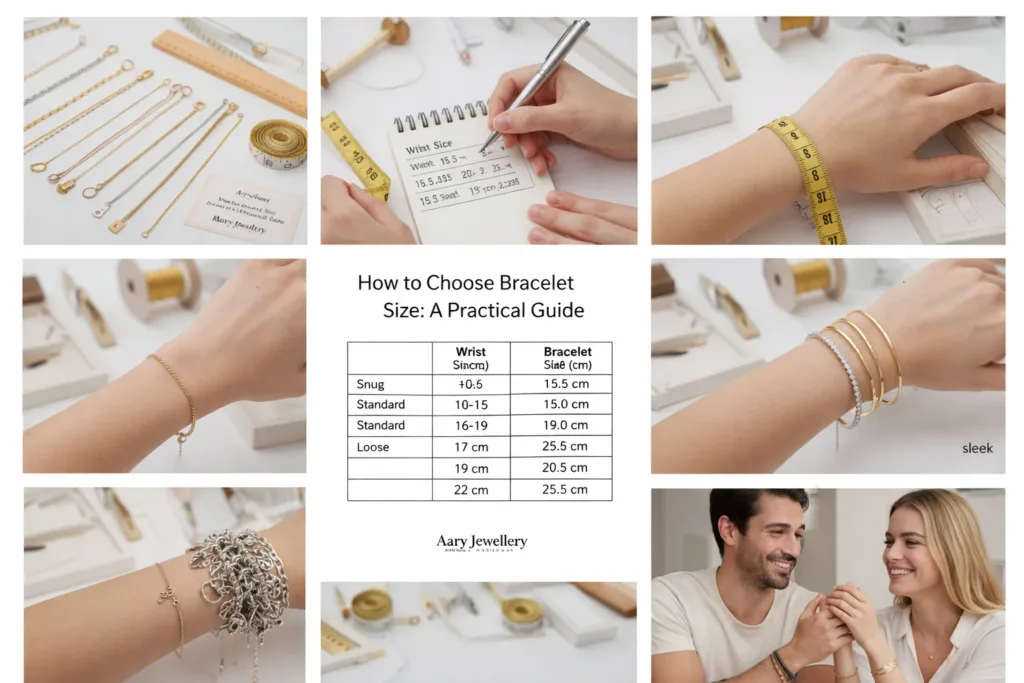
How to Measure Your Wrist for a Bracelet
This is the most reliable way, and yes, it’s simple.
What You’ll Need
- A soft measuring tape
- OR a string + ruler
- A relaxed wrist (don’t tense it)
Step 1: Measure Your Wrist
Wrap the tape snugly around your wrist, just below the wrist bone. Not tight, not loose. Write that number down.
Step 2: Add Comfort Allowance
This is where bracelet style matters.
| Fit Type | Add This Much |
|---|---|
| Snug fit | +0.5 cm |
| Standard fit | +1.0 – 1.5 cm |
| Loose / drape fit | +2.0 cm |
So if your wrist is 15.5 cm, a standard bracelet size would be around 16.5 – 17 cm.
Bracelet Size Chart
This table helps when buying online or comparing styles.
| Wrist Size (cm) | Bracelet Size (cm) |
|---|---|
| 14 – 15 | 15.5 – 16 |
| 15 – 16 | 16.5 – 17 |
| 16 – 17 | 17.5 – 18 |
| 17 – 18 | 18.5 – 19 |
| 18 – 19 | 19.5 – 20 |
This is not a strict rule, but a starting point.
How to Choose Bracelet Size Based on Bracelet Type
Not all bracelets behave the same. This part is often skipped, but it shouldn’t be.
Chain Bracelets
Chain bracelets are flexible and forgiving. A standard fit usually works well here.
Best tip: If there’s an extender, go slightly smaller.
Bangle Bracelets
Bangles are measured differently. Instead of wrist circumference, you measure hand width, because the bangle must pass over your knuckles.
Loose bangles slide more but feel elegant. Tight bangles look sleek but must fit perfectly.
Tennis Bracelets
Tennis bracelets should not flip or slide excessively.
A jeweller rule of thumb:
One finger should fit comfortably between bracelet and wrist.
Charm Bracelets
Charms add weight. Always size slightly larger than your wrist measurement, or the bracelet will feel tighter over time.
Common Bracelet Sizing Mistakes
These happen more than people admit.
- Measuring too tight because you’re scared it’ll fall
- Copying ring size logic
- Ignoring wrist shape
- Buying “standard size” without checking measurements
- Forgetting that wrists swell slightly in warm weather
This is especially common when choosing a bracelet for birthdays, anniversaries, or special occasions. People focus on meaning and design, then forget the practical side.
If you’re unsure, it’s safer to explore curated bracelet options that are designed with gifting in mind, like these bracelet gift ideas in Singapore, where sizing flexibility and style balance are usually considered together
Men vs Women Bracelet Sizing
While wrists vary a lot, there are common ranges.
| Category | Typical Bracelet Size |
|---|---|
| Women | 16 – 18 cm |
| Men | 18 – 21 cm |
That said, we’ve sized delicate 15 cm bracelets for men and bold 20 cm ones for women. Style beats labels.
Real-World Insight from Fine Jewellery Work
From working with custom jewellery clients, one pattern stands out:
People often choose bracelets too small because they want it secure.
Later, they come back asking for resizing.
A comfortable bracelet feels almost forgotten after a few minutes. If you keep adjusting it, something’s wrong.
How to Choose Bracelet Size When Buying Online
Online shopping removes the “try on” moment, so measurement matters more.
Before clicking buy:
- Measure twice, not once
- Check if resizing is offered
- Read product description carefully
- Look for real wrist photos, not flat lays
If the brand offers guidance, use it. Serious jewellers usually do.
Conclusion: Choosing the Right Bracelet Size with Confidence
Knowing how to choose bracelet size is less about memorizing charts and more about understanding how a bracelet lives on your wrist. Movement, weight, style, and comfort all play a role.
At Aary Jewellery, bracelet sizing is never treated as an afterthought. With decades of fine jewellery experience, each piece is designed and sized to sit naturally, not fight against your wrist.
If you’re choosing a bracelet for daily wear, a special occasion, or a meaningful gift, proper sizing changes everything.
FAQs (Frequently Asked Questions)
How tight should a bracelet be?
It should sit comfortably without leaving marks. You should be able to move your wrist freely.
Can a bracelet be resized later?
Some can, some can’t. Chain bracelets are easier than bangles or tennis bracelets.
Is bracelet size the same as wrist size?
No. Bracelet size includes extra room for movement.
What if I’m between sizes?
Always go slightly bigger. It’s safer and more comfortable.
Do luxury bracelets follow the same sizing rules?
Yes, but precision matters more because materials are heavier and less forgiving.