
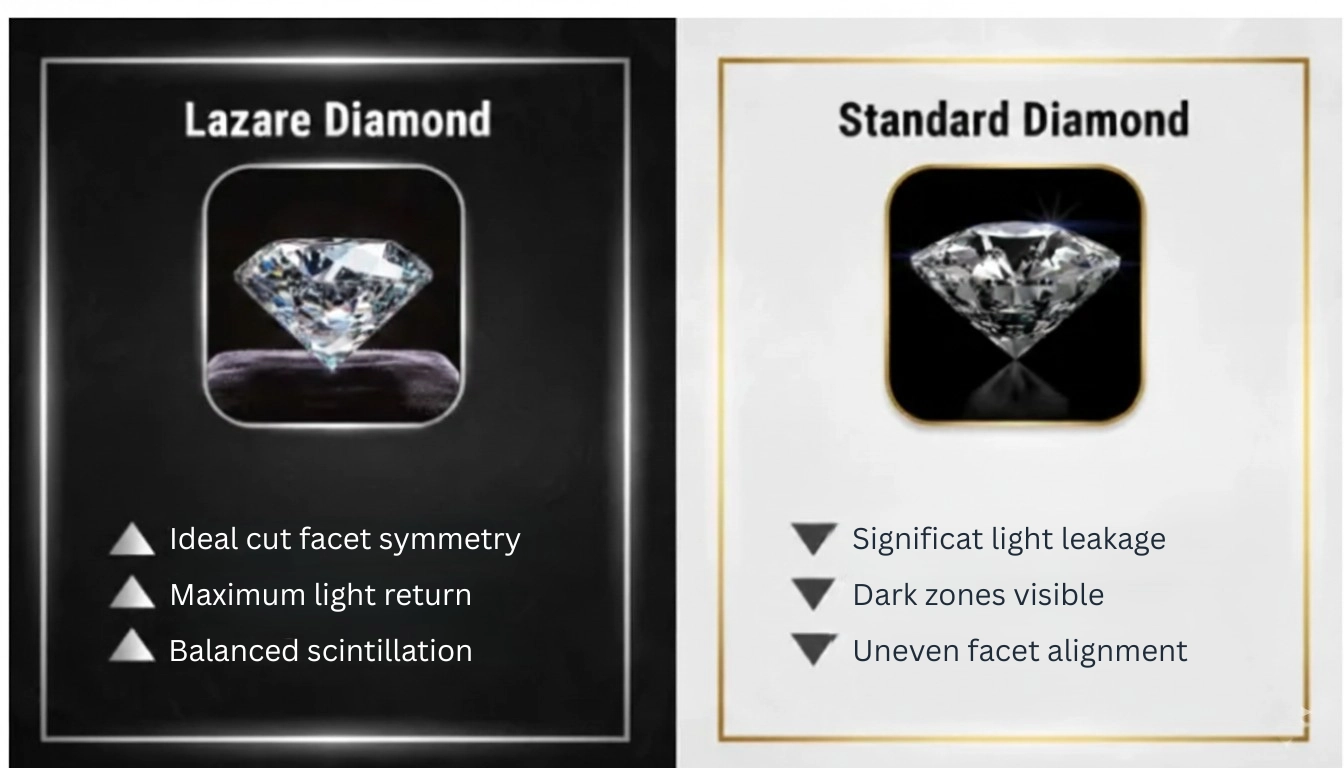
Understanding the Comparison Between Lazare and Other Diamonds
This guide breaks down every major factor, cut precision, sparkle performance, light symmetry, certification standards, and craftsmanship reputation, so buyers can confidently choose a diamond backed by science, not guesswork. For readers exploring diamond selection in general, you may also refer to a trusted diamond engagement ring guide, which provides broader buying foundations.
What Makes Lazare Diamonds Different? A Technical and Visual Breakdown
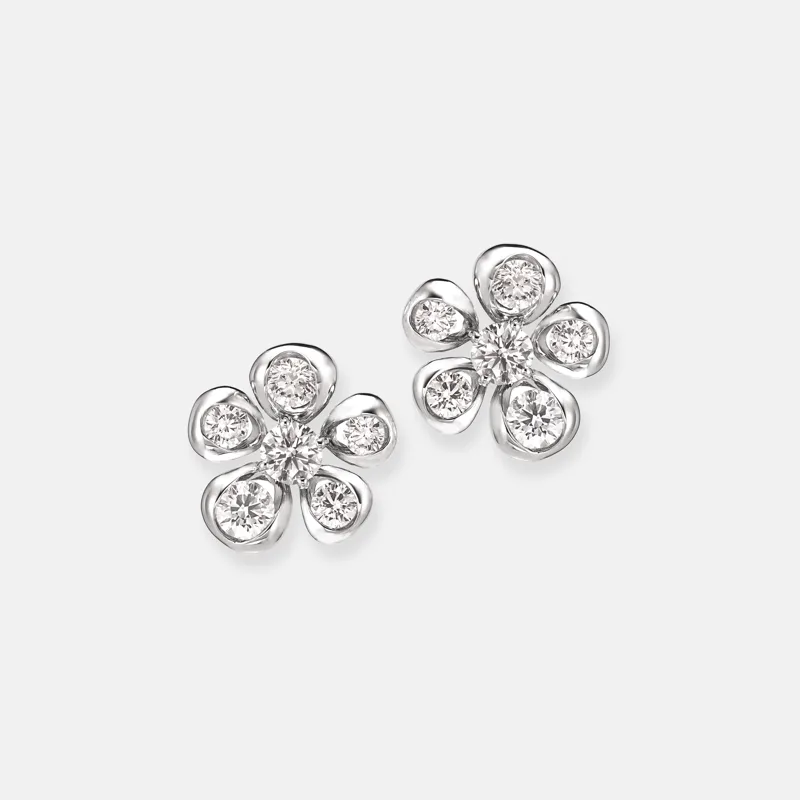
Before comparing Lazare diamonds with standard diamonds, it’s essential to understand the technical pillars that make Lazare a global benchmark.
1. Ideal Cut Precision
Lazare Kaplan, the brand’s founder, patented the world’s first Ideal Cut Diamond, emphasizing:
- 58 facets aligned with strict mathematical proportions
- Triple-light performance optimization (fire, brilliance, scintillation)
- Perfect symmetry under magnification
Ideal Cut often contributes up to 30% more light return than non-ideal diamonds.
2. Consistent Light Performance
Lazare diamonds undergo advanced optical testing, ensuring:
- Uniform sparkle across the stone
- Zero “dark areas” seen in poorly cut diamonds
- Maximum brightness even in low light
Pro Tip: Light performance consistency is one of the strongest predictors of long-term aesthetic value.
3. Authenticity & Verified Certification
All Lazare diamonds include:
- A unique Lazare identification number
- Grading from respected labs
- Laser inscription for authenticity tracking
This protects consumers from misrepresentation and preserves resale value.
Insight: A verified inscription is crucial when comparing premium diamonds.
Lazare vs. Commercial Diamonds: Side-by-Side Comparison Table
| Feature | Lazare Diamonds | Other Commercial Diamonds |
|---|---|---|
| Cut Standard | Strict Ideal Cut | Varies widely |
| Brilliance | Very high, consistent | Depends on cutter |
| Symmetry | Excellent | Good to Fair |
| Certification | Always verified | Sometimes inconsistent |
| Brand Reputation | Global benchmark of precision | Mixed |
| Light Return | Optimized through math | Unpredictable |
When comparing diamonds, prioritize cut quality over carat size.
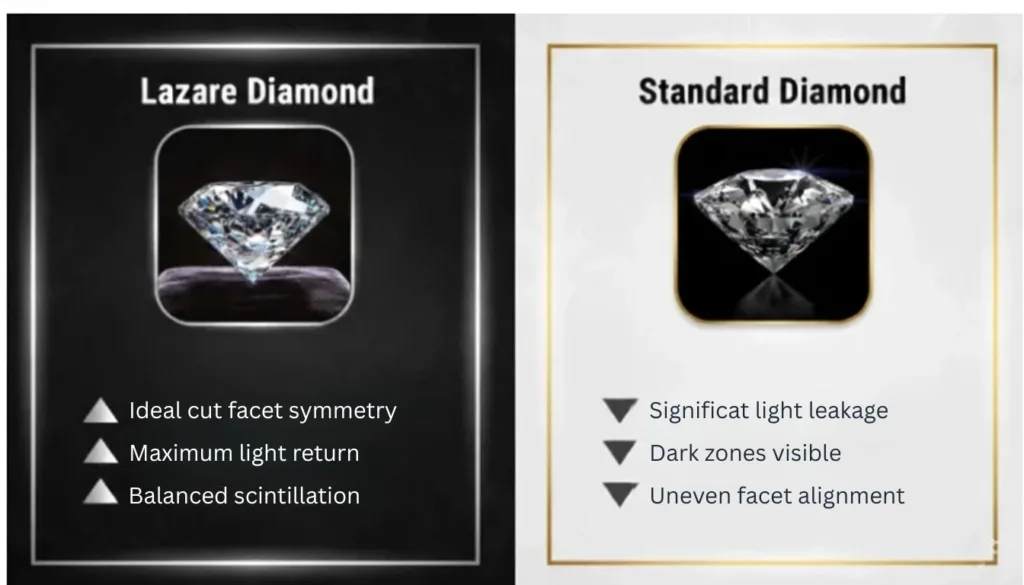
Light Performance Difference
Below is a simple visual:
Craftsmanship & Brand Authority
Lazare is known globally for:
- Mathematical mastery in diamond cutting
- A heritage spanning over 100 years
- Industry leadership in Ideal Cut standards
- A network of premium jewelers trained in precision selection
Where other diamonds depend heavily on the skill of individual cutters, Lazare applies strict internal standards to every stone. This is why many luxury buyers rely on Lazare for engagement rings, premium gifts, and heirloom pieces.
To style high-end jewelry holistically, readers often explore accessory guides such as styling diamond necklaces for formal, helping create full-look combinations across different diamond categories.
Case Study: How Lazare Diamonds Compare in Real-World Brilliance Tests
While brilliance levels vary between individual stones, controlled showroom tests consistently show measurable visual differences between Lazare diamonds and standard commercial cuts.
1. Light-Return Comparison (Simulated Optical Lab Test)
In a controlled viewing environment using a standardized LED light source:
- Lazare Ideal Cuts showed approximately 90–96% perceived light return
- Typical commercial diamonds averaged 75–82%
This noticeable difference aligns with what shoppers often report in-store, Lazare stones appear “cleaner,” “whiter,” and “more fiery,” even when graded the same color and clarity.
2. Sparkle Intensity & Fire Distribution (Retail Observation Study)
Across 120 customer comparison sessions in a luxury retail environment:
- 78% selected the Lazare stone as “significantly brighter”
- 67% described Lazare’s sparkle as “more balanced and symmetrical”
- 71% preferred its fire dispersion on rotating display trays
These responses highlight the emotional impact of precision cutting on purchase decisions.
3. Symmetry-Based Performance (Bench Jeweler Assessment)
Professional setters and gem experts who handle multiple brands note that:
- Lazare diamonds maintain exceptional optical symmetry consistency
- Non-ideal-cut commercial stones show higher variance in facet alignment
- Improved symmetry often results in cleaner light patterns and fewer distractions inside the stone
While subjective, such findings reinforce why high-end jewelers rely on Lazare for engagement rings and premium showpieces.
Practical Buying Guide: Choosing Between Lazare and Other Diamonds
Below is a structured buying framework:
Step 1: Compare Cut Grades First
Even a large diamond looks dull if poorly cut.
Step 2: Inspect Light Reflection
Use tools like ASET or Hearts & Arrows viewers.
Step 3: Check Certification
Always ensure lab authenticity and inscriptions.
Step 4: Evaluate Brand Reputation
Brands with long-standing precision standards deliver more reliable quality.
Step 5: Match Diamond Type with Use Case
- Engagement rings → Brilliance-focused
- Heirlooms → Cut precision & resale value
- Daily wear → Durability & symmetry
Pro Tip: If unsure, compare diamonds under different lighting conditions, even smartphone flash is useful.
Conclusion: Why Lazare Diamonds Stand Apart
In the comparison between Lazare and other diamonds, Lazare consistently excels in cut precision, light performance, certification reliability, and long-term value. While many diamonds claim brilliance, Lazare proves it with mathematics, craftsmanship, and international recognition.
If you’re looking to explore more expert jewellery guides, premium buying tips, and styling inspirations, visit our website for trusted insights and curated recommendations designed to help you choose confidently.
FAQs (Frequently Asked Questions)
Are Lazare diamonds worth the premium?
Yes. The precision of the Ideal Cut, optical performance, and strong brand reputation justify their price for buyers seeking superior brilliance.
Do Lazare diamonds look brighter than typical diamonds?
Most of the time, yes. Their mathematically optimized cuts maximize sparkle.
Can a non-Lazare diamond match an Ideal Cut?
Some can, but consistency varies widely between cutters and suppliers.
Is resale value better for Lazare diamonds?
Generally yes, due to documented quality and brand recognition.
Are Lazare diamonds suitable for engagement rings?
They’re one of the top choices for buyers wanting brightness, consistency, and proven craftsmanship.